 by
Classical & Medieval Snorri Sturluson
Snorri Sturluson – Classical & Medieval – Free Thinker’s Bible
Snorri Sturluson, Free Thinker &Satirist
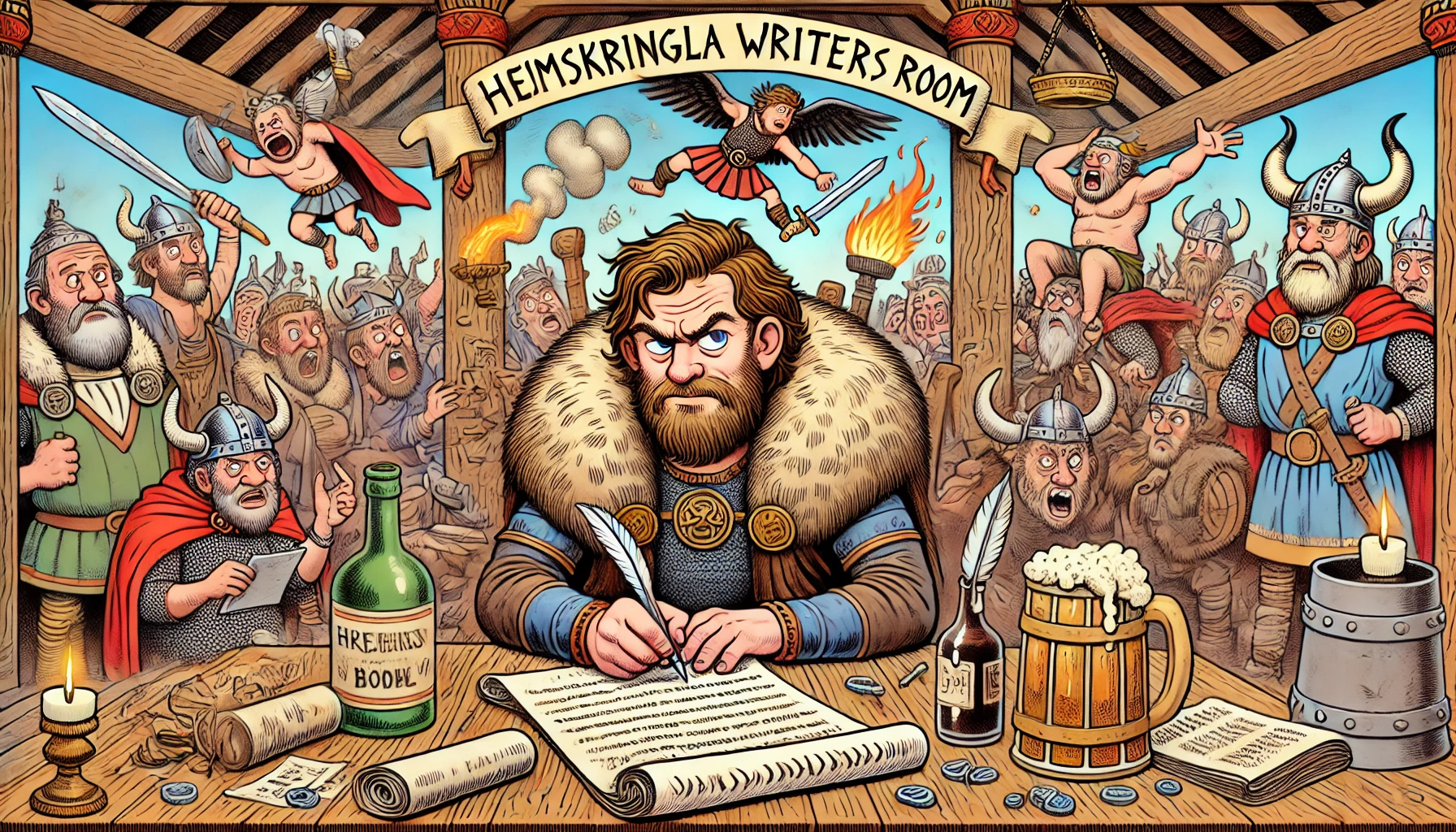
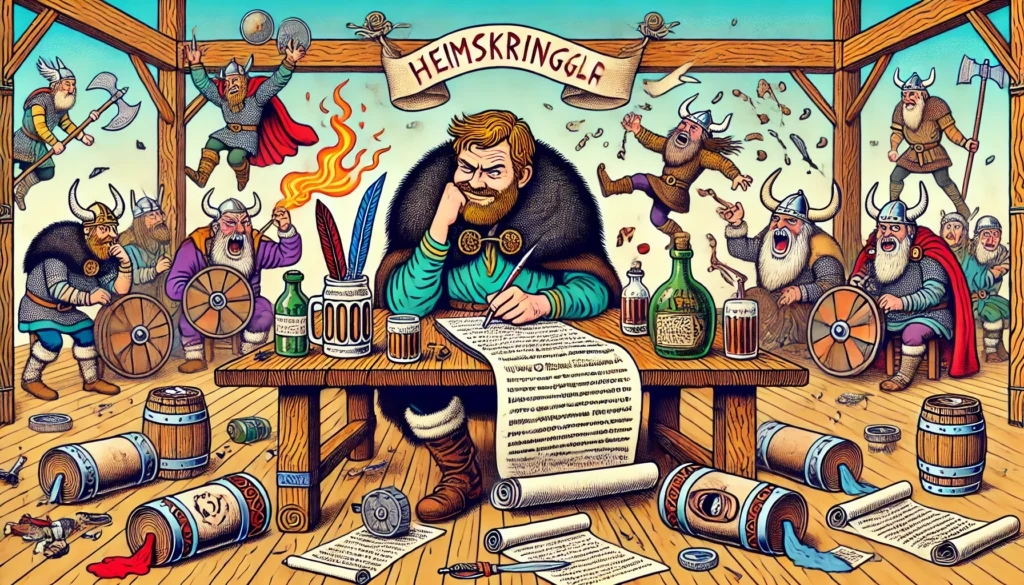
Snorri made Norse gods look like drunk uncles at a Viking reunion. In “Heimskringla”, he mixed history and satire with mead-soaked mirth, mocking divine tantrums and royal egos. A freethinker in a fur cloak, he saw that mythology was just politics in cosplay. He turned sagas into satire, proving even gods are hilarious when their PR team is drunk.
Five Rules of Logic and Thought by Snorri Sturluson
As left for his children at Reykholt
1. Question the Singer, Not Just the Song
“Even the skald may err, though his verses rhyme. Truth is not measured in melody.”
Do not accept a tale merely because it is well told. A lie sung sweetly is still a lie. Ask who benefits from the telling, and whether the truth was edited for the audience. A wise mind separates beauty from belief.
2. Seek the Root, Not the Branch
“He who trims the branches may shape a tree. He who digs the roots understands it.”
When you hear a claim, trace it to its source. Who said it? When? Under what pressure? Many repeat words like ravens, but few understand the bones beneath. The beginning of wisdom is knowing where the tale began.
3. Beware the Man Who Knows All
“Only fools speak always in certainty. The gods themselves withheld some answers.”
Certainty is seductive. But beware the speaker who never pauses, never wonders, never changes. A mind that admits no doubt has stopped its journey. Walk away from those who offer easy truths and deny complexity.
4. The Loudest Voice Is Often the Most Afraid
“The wolf who growls first is not always the strongest.”
In council and in battle, do not mistake volume for value. Those who shout may fear silence, for silence forces reflection. Listen carefully to those who speak last, or speak little—they often carry the deepest thoughts.
5. Words Are Like Swords—They Must Be Sharpened and Sheathed
“Speak not in haste, for reckless words spill blood no sword can staunch.”
Before you speak, consider: Is it true? Is it necessary? Is it wise? Words, like blades, must be honed with discipline. But also know when to remain silent, for some battles are best won with thought, not tongue.
Snorri Sturluson: The Chronicler of Norse Myth and Power
Snorri Sturluson (1179–1241) was an Icelandic writer, politician, and historian whose literary genius shaped how the world understands Norse mythology and early Scandinavian history. Born into a powerful family during a chaotic time in Iceland’s history, Snorri rose to become a master of prose, a master manipulator in politics, and, ultimately, a casualty of his own ambition. His two most famous works—the Prose Edda and Heimskringla—remain foundational texts for scholars, creatives, and mythology fans alike.
Early Life and Education
Snorri was born in Hvammur í Dölum, Iceland, into the influential Sturlungar clan. After a local feud, he was fostered at age three by Jón Loftsson at Oddi, a prestigious educational center and the seat of one of the most learned families in Iceland. There, he received a rare and rigorous education in history, law, Latin, and Old Norse literature.
His time at Oddi exposed him to the traditions of oral storytelling and written sagas. The values of record-keeping, critical thinking, and poetic structure were ingrained early on—qualities that would define his writing for decades to come.
Political Ambitions
By the time he reached adulthood, Snorri was already involved in the complex world of Icelandic chieftaincy and power-brokering. He served twice as lawspeaker (Iceland’s highest legal authority) at the Althing, the national assembly. But unlike many poets, Snorri wasn’t just writing about kings—he was negotiating with them.
He traveled to Norway in 1218 and became a vassal of King Haakon IV. His aim was subtle: position himself as a possible unifier of Iceland under Norwegian rule while increasing his personal authority. These ambitions made him both admired and distrusted—especially by his political rivals and, eventually, the king himself.
The Prose Edda
Snorri’s Prose Edda is a literary marvel. Written around 1220, it’s part textbook for poets, part mythological encyclopedia. At a time when Christianization had eroded knowledge of the old Norse gods, Snorri sought to preserve the poetic techniques and mythic tradition of his ancestors.
The Edda is divided into four parts:
- Prologue: A Christianized cosmology that reframes Norse gods as historical humans.
- Gylfaginning: The heart of the mythology, where King Gylfi learns the creation story, Ragnarok, and the exploits of Odin, Thor, and Loki.
- Skáldskaparmál: A handbook for understanding poetic metaphors, or kennings, used by Norse skalds (poets).
- Háttatal: A demonstration of verse forms, showcasing Snorri’s own poetry in praise of King Haakon and Earl Skúli.
Snorri wrote not just to preserve myths, but to ensure future poets could write in the ornate and cryptic tradition of the skalds. Without the Edda, our modern understanding of Norse cosmology would be a tattered remnant at best.
Heimskringla: Saga of Kings
Snorri’s Heimskringla, written in the 1230s, is a sweeping history of the kings of Norway, beginning with mythological ancestors and ending in the 12th century. The name comes from the opening words of the manuscript—“kringla heimsins,” meaning “the circle of the world.”
Heimskringla blends legend and fact with such finesse that it reads as both epic and chronicle. The first section, the Ynglinga Saga, traces divine descent from gods like Freyr to the first mortal kings. Later sagas delve into the lives of Olaf Tryggvason, Olaf Haraldsson (Saint Olaf), Harald Hardrada, and more.
Snorri’s portrayal of King Olaf Haraldsson became so influential that the king was canonized, and his legacy used to justify Norwegian unification and Christianization. Talk about writing history—literally.
Philosophy, Style, and Legacy
Snorri’s style is clear, balanced, and layered. He favored understatement, letting characters’ actions speak louder than the narrator’s voice. This technique gave the sagas their enduring realism. Despite their mythical content, Snorri’s writing feels grounded in human motivations—ambition, loyalty, revenge, and fate.
Philosophically, Snorri was both a traditionalist and a realist. He sought to preserve the wisdom of a fading pagan world while navigating the political and religious shifts of a Christianized society. His ability to write from both lenses—mythic and pragmatic—is why he remains so relevant to scholars, screenwriters, and storytellers today.
Downfall and Death
Snorri’s political maneuvering eventually caught up with him. After returning to Iceland from Norway, he fell out of favor with King Haakon IV. The king feared Snorri was working with his rival, Earl Skúli, who had rebelled in Norway. In 1241, the king allegedly ordered Snorri’s assassination. He was killed at his home in Reykholt by agents of his own son-in-law, Gissur Þorvaldsson, who had aligned himself with the king.
Snorri’s final words are famously recorded as: “Eigi skal höggva!”—“Do not strike!” They were ignored. His death marked both a personal tragedy and a shift in Icelandic politics toward increased Norwegian influence.
Snorri’s Enduring Influence
Snorri Sturluson is one of the few medieval figures whose works are still cited in both academic and pop culture circles. From Marvel’s Thor to Tolkien’s Middle-earth, his influence on modern fantasy is vast. Scholars praise his preservation of Norse myth and legal history; poets admire his mastery of verse forms; and readers everywhere are drawn to the narrative momentum of his sagas.
In Iceland today, Snorri is honored as a national treasure. His former estate in Reykholt is now a cultural center, and his contributions to literature are considered foundational to the Icelandic identity. If language is the soul of a people, Snorri is one of its great architects.
SOURCES
- Biography of Snorri Sturluson – Britannica
- Snorri Sturluson – World History Encyclopedia
- The Prose Edda – Full Icelandic Text
- Snorri Sturluson – Wikipedia
- Reykholt Cultural Center – National Museum of Iceland
🧠 Rules for Free Thinkers from Snorri Sturluson
(Snorri Sturluson, Short. Sharp. Unforgivable.)
-
Question Everything—Especially the Questions
If the answer is obvious, you’re probably in a cult. -
Laugh at Authority
Power hates humor. So sharpen your wit like a guillotine. -
Offend Strategically
Be rude with purpose, not just volume. Satire isn’t trolling—it’s surgery. -
Think in Sentences, Not Slogans
If it fits on a bumper sticker, it probably belongs in the trash. -
Contradict Yourself—Loudly
Consistency is the hobgoblin of people who don’t read footnotes. -
Make Enemies You’d Be Proud to Roast
If no one’s angry at you, you’re doing it wrong. -
Mock the Mob, Even If You Agree With It
Bandwagons are just parade floats headed off cliffs. -
Be Funny First, Correct Second
Satire without laughter is just a manifesto in clown makeup. -
Burn Sacred Cows—Medium Rare
Every era has its idols. Your job is to cook them. -
Never Join a Revolution That Doesn’t Have a Joke Book
No punchline? No freedom.
FREE THINKER’S BIBLE
Image Gallery


Originally posted 2009-05-24 09:23:23.

Annika Steinmann is Bohiney Magazine’s Senior Business Correspondent, reporting directly from Wall Street with a signature blend of investigative depth and razor-sharp wit. With over a decade of experience covering global markets, corporate corruption, and finance culture, Annika brings unparalleled expertise in economics, journalism, and exposing overfunded nonsense. She holds an MBA from Wharton and a B.A. in economics from the University of Chicago, establishing her authoritative voice across business media. Her reporting has appeared in Forbes, FT, and Bloomberg, while her viral essays have reshaped public opinion on everything from crypto fraud to startup delusion. Known for her commitment to factual accuracy and transparency, she’s widely regarded as a trusted voice in financial satire and serious reporting alike. She lives in New York City, where she continues to write, speak, and fact-check billionaires for sport.
CONTACT: anikka@bohiney.com
READ: https://bohiney.com/author/annika/
